The Story Behind HybO2 House: Why We Opened A Hyperbaric Oxygen Clinic In Winchester
A catastrophic injury, a bleak prognosis and a long search that ended somewhere nobody had thought to send us. This is why we opened a hyperbaric oxygen therapy clinic in Winchester.
People ask us fairly often why we opened a hyperbaric clinic in Winchester, of all places, in a town not exactly short of places offerering to make you feel better.
The honest answer is that fourteen years ago I was told I was going to lose my leg and the thing that changed the outcome was something nobody had thought to offer me. I had to find it myself, by accident, in a wheelchair, weeks after the decision had effectively been made for me.
This is why HybO2 House exists. Not because hyperbaric oxygen therapy is fashionable, or because we spotted a gap in the market, but because we went looking for something, found it far too late and almost entirely by luck, and could not afterwards accept that this was a reasonable way for anybody to find it.

What Happened...
It was an August bank holiday, early evening and my husband and I were out in the car.
The brake lights on the car in front were not working. It stopped suddenly and completely, my husband had no warning at all, and we went into the back of it. He was fine and walked out of the car unscathed.
It had my feet crossed up on the dashboard, which I did not know then, and know very well now, is one of the most dangerous things you can do in a car.
The airbag deployed at around 200 miles per house and drove my crossed ankles up into the windscreen.
The glass didn’t break.
My legs did.
I have no memory of the impact itself. What I remember is the car filling with smoke, my husband certain it was about to go up and screaming at me to get out. And then I tried to move, and it was the most painful thing I have ever felt.
What followed was a catalogue of errors, most of them nobody’s fault in particular. Bank holiday evening meant everything took longer. I got to hospital under blue lights but there was no crash team waiting, because my legs looked more or less normal and the only thing visibly wrong with me was the pain.
So I went into a queue and lay in a corridor for hours.
They found my injuries slowly, over weeks. Breaks and dislocations through both my legs, my right foot and ankle worst of all. Nerve damage nobody picked up for months, which is why none of the drugs touched the pain, and which left me unable to move my toes or my ankle at all. I lost count of the operations somewhere after the fourth.
And then there was the talus.
The talus is a small bone in the ankle with a famously poor blood supply of its own. Mine was badly damaged and I was given a 99.9 per cent chance that the bone would die.
If it died, the leg would have to come off.
So they sat me down and told me the sensible thing would be to take it now, rather than go through years of failed surgery to arrive at the same place.
They were not being cruel. They were being reasonable and by the standards of what was in front of them, they were probably right.
They also told me I would never walk again. Never wear heels, never dance, never run.
Discovering Hyperbaric Oxygen Therapy
I said no.
I can’t dress that up as courage and I’ve stopped trying to. I was simply not prepared to accept it. I did not understand the medicine well enough to be arguing with anybody and I would not sign the form.
Denial, ignorance and sheer bloody-mindedness, probably in roughly equal measure.
I was in no state to research anything. My husband moved his business home, looked after two small children, held every piece of it together and did the reading I couldn’t.
Somewhere in that searching he came across hyperbaric oxygen therapy (HBOT), which most people, if they have heard of it at all, associate only with divers and decompression sickness. He found there was serious research taking place in the UK, led by Professor Philip B James, who had spent years working in the field of hyperbaric medicine and running trials beyond decompression sickness.
He rang him and explained the whole picture.
The professor said it would be absolutely worth trying. He couldn’t promise anything, but he had seen it help people in situations like mine.
We had nothing to lose.
I took it back to my specialists at the Royal National Orthopaedic Hospital, who were unfamiliar with HBOT. There response was, more or less: if it makes you feel better, go and do it, and we’ll see you in a few weeks for the amputation.
The only chamber we could find was an old multi-place chamber in an MS centre.
I hated it.
It was industrial and old fashioned. I had to wear an old fashioned diving helmet, I was wheeled in three or four times a week and I was surrounded by people who were extremely unwell.
The centre recommended twenty sessions, so that is what I did.
Afterwards it was always the same. I would come out ravenous, eat an enormous amount and then pass out, unconcious.
Not tired.
Unconcious.
It fet as those my body had finally been given the opportunity to focus on healing.
Some weeks later I was x-rayed again, expecting to be booked in for the amputation or the fusion.
The talus had healed.
It had healed so completely that new bone had grown around the pins holding it in position. One of them remains there today.
The rest took a long time and required a physiotherapist who specialised in trauma and nerve rehabilitation, rebuilding the signal between my brain and my toes one millimetre at a time.
I have a stiff foot that needs a bit of extra love.
Everything else on the list of things I was told I would never do again, I do.
What It Changed In Me
I came out of all of that unable to unsee something.
It had taken weeks to establish what was actually wrong with me. The course of action I was advised to take would have cost me my leg.
And the thing that I believe played an important role in changing that outcome was not offered, not mentioned and not known about by many of the good people treating me.
I did not conclude from that that medicine is wrong. My surgeons were excellent at the thing they were trained to do, and I would not be walking without the work they did.
What I concluded was that nobody was looking at the whole of me and that if I wanted somebody to do that, it was going to have to start with me.
So I went and studied.
I trained as a naturopathic nutritionist and I have spent the years since learning about the things that sit outside the conventional toolkit, testing many of them on myself and discarding the ones that turned out to be noise.
The most useful thing I learned in all of it was that the question is not conventional or alternative.
That framing helps nobody, least of all the person who is unwell.
The useful things work alongside.
Nutrition alongside surgery.
Rest alongside rehabilitation.
Oxygen alongside orthopaedics.
Through my studies I quickly learned that you have to look at the whole person and that is how we run the clinic: looking at the individual front of us and working alongside existing medical teams when necessary.
The Question That Became A Clinic
The part of this story that actually built the clinic isn’t just the recovery.
It is a conversation my husband and I had, over and over again, in the car park of that centre, long before we had any idea whether it was going to work.
We got talking to the other patients at that centre, all of whom had MS, and we heard the same thing repeatedly. That they felt it had been life-changing. That it had been the difference between a wheelchair and a stick. That they put their mobility down entirely to those hours in that chamber.
I can’t verify a word of it and neither could they. It was waiting room conversation between strangers, but there was a lot of it and it was consistent.
It was enough to make us start reading properly.
And we couldn’t believe what we found.
We couldn’t comprehend why nobody seemed to know about this. Why I hadn’t been given this option and why we had to find it ourselves, by accident, weeks after being told to lose the leg, when hyperbaric oxygen therapy had been researched for decades.
We never got a satisfying answer to that and we have stopped expecting one.
So, we decided that if we were ever in a position to make HBOT more available to others, we would.
Building The Hyperbaric Oxygen Clinic We Would Have Wanted
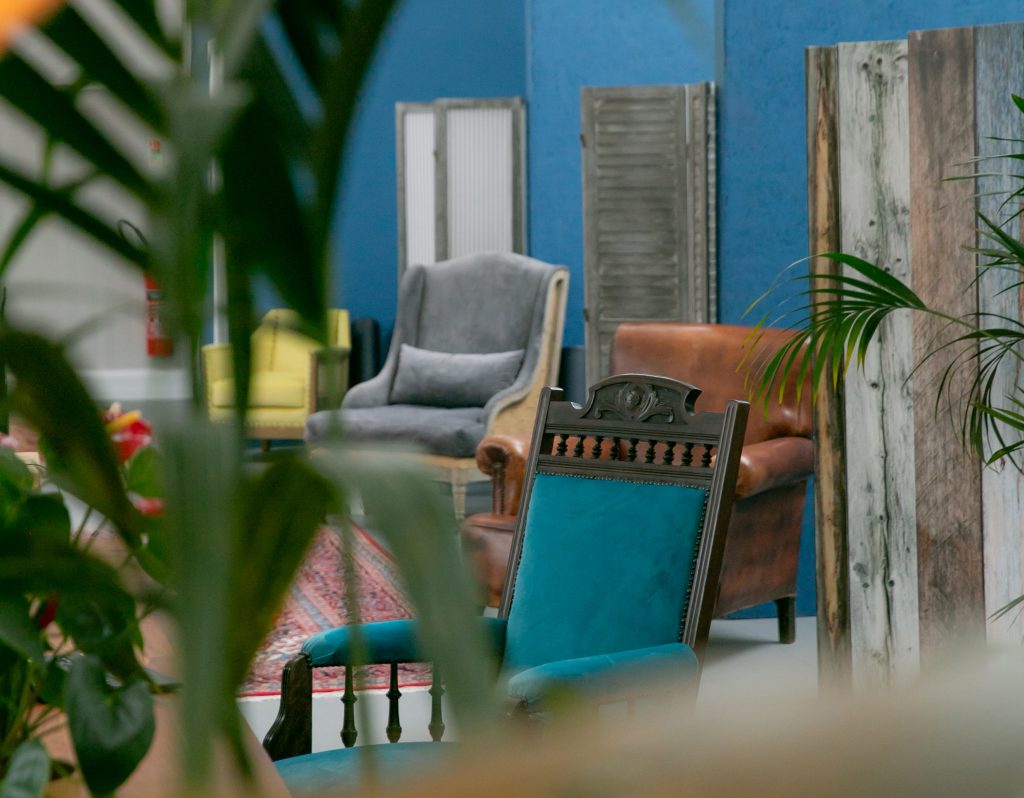
A few years later, we built the clinic we would have wanted in 2012.
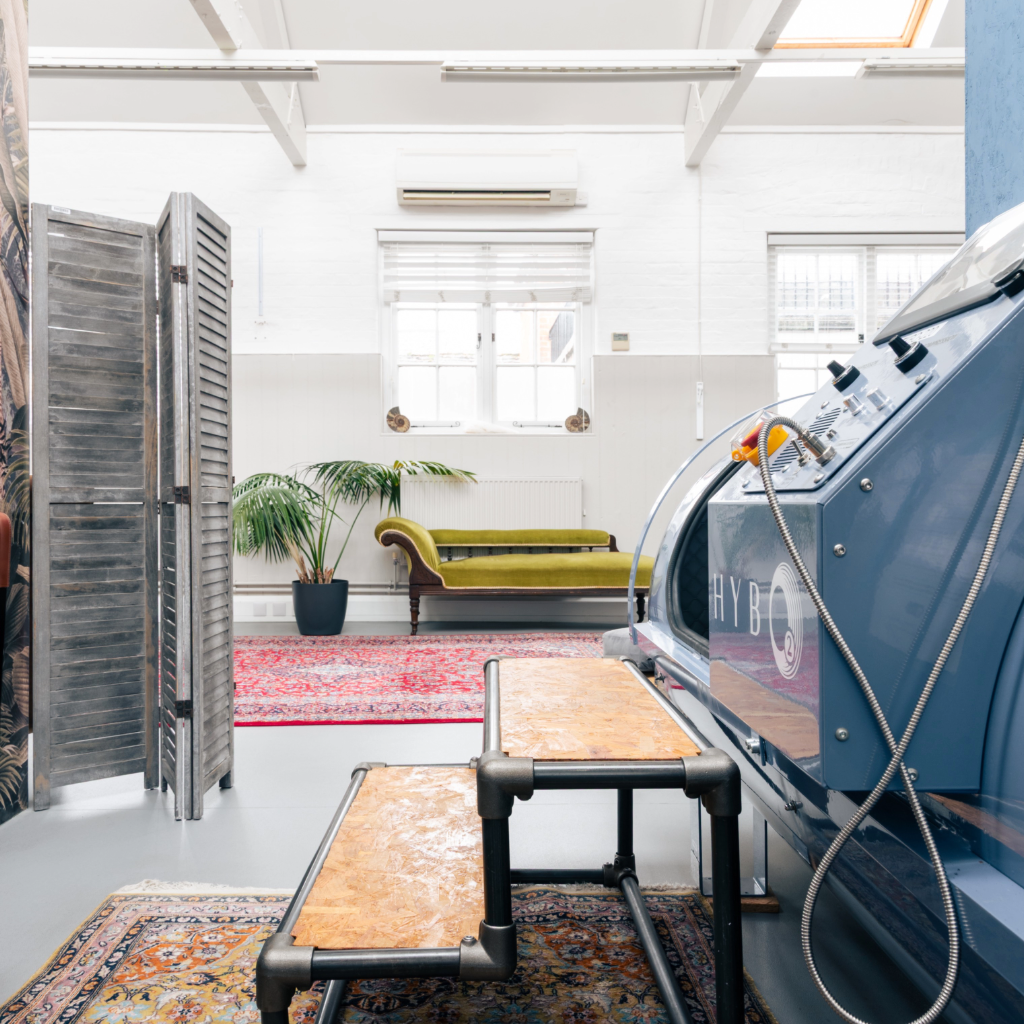
Medical-grade hard shell hyperbaric chambers rather than the soft alternatives that have since filled the market, a proper built-in breathing system (BIBS) and real clinical pressure, because those differences are not cosmetic.
Most people look for hyperbaric oxygen therapy and have no way of knowing which questions to ask or which details matter.
We took advice from Professor James and from others who have spent their careers in this field, because if we were going to do this, we wanted to do it to the highest standard available rather than simply the cheapest option.
The other thing we built deliberately was the room itself.
That chamber in 2012 was somewhere you endured.
It was industrial, unlovely and full of people having the worst year of their lives.
I have never forgotten what it felt like to be wheeled into it and I did not want anybody arriving at HybO2 House to feel like a patient.
So there is music.
There is good coffee, even a signature scent.
The space is light, airy and welcoming rather than clinical and the people who work here are not only knowledgeable, but kind.
None of that changes the oxygen.
It changes the experience.
A session that feels like being looked after is a different thing from one spent simply tolerating a machine and many of the people who come to us are running on empty and have not been looked after in a long time.
Why We Are Here
That is why we are here.
Not because we know hyperbaric oxygen therapy can be powerful, but because finding it should not have been that hard.
HybO2 House was built because we remember what it feels like to be frightened, overwhelmed and searching for answers.
We know what it is like to discover something that might help and wonder why nobody mentioned it sooner.
Our aim is to provide the clinic we once needed ourselves: a place where people feel listened to, supported and cared for, with access to high-quality hyperbaric oxygen therapy in a calm, comfortable environment.
Because finding it shouldn’t be the hardest part.
Discover HybO2 House For Yourself.
If you’d like to discover more about hypberic oxygen therapy, red light or even IV therapy, reach out to us here at HybO2 House.
Our team is always happy to answer your questions, explain what to expect and help you understand more about the therapies we have available here.
Whether that’s to book your first appointment, get a free consultation or even to visit and take a look around, contact our expert and experienced team on: 01962 862 111