Imagine waking up tomorrow morning and suddenly realising you can’t hear properly from one ear.
Would you know what to do?
Most of us would probably assume it was blocked. Perhaps water in the ear, a build-up of wax, the aftermath of a cold, something that could wait a few days to see if it cleared.
But sometimes, sudden hearing loss is something very different.
Sudden sensorineural hearing loss, often shortened to SSNHL, is considered a medical emergency.
And one of the most important things to know about it is surprisingly simple:
Timing matters.
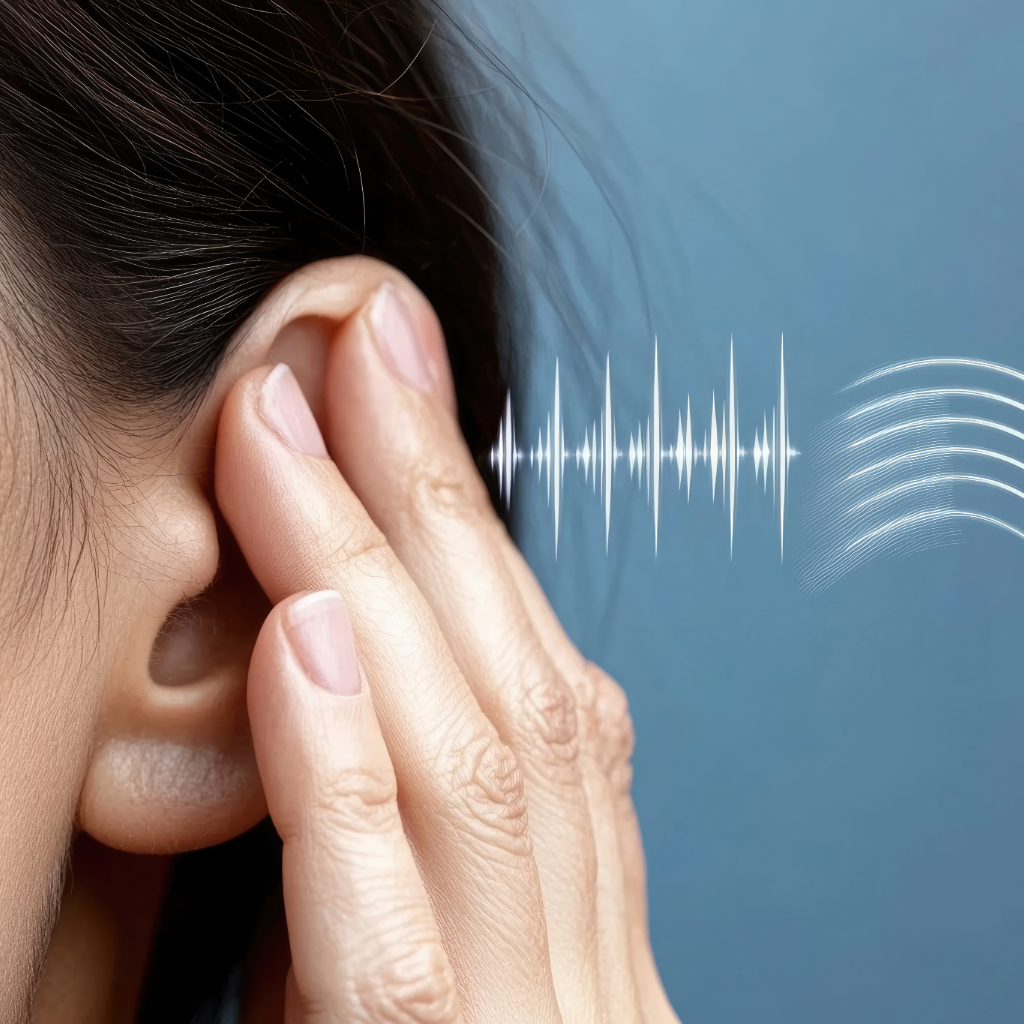
What is sudden sensorineural hearing loss?
SSNHL is a rapid loss of hearing caused by a problem within the inner ear or the nerve pathways involved in hearing.
It usually affects one ear and can happen incredibly quickly, sometimes over a matter of hours, or across a few days.
For some people, it’s obvious. They suddenly realise they can barely hear on one side.
For others, it can feel more subtle at first.
Sounds may become muffled. One ear might feel blocked or full. There may be a ringing or tinnitus, dizziness or a noticeable difference when using the phone on one side.
And that is partly what makes it so easy to dismiss.
Not everyone immediately thinks:
“I need urgent medical attention.”
But NICE classifies sudden hearing loss that isn’t explained by an obvious outer or middle-ear problem as requiring immediate or urgent specialist medical care. Where hearing loss has developed over three days or less within the previous 30 days, the guidance is for the person to be seen within 24 hours by ENT or an emergency department.
So if you suddenly notice a significant change in your hearing, this is not one to simply “wait and see.”
Why is speed so important?
The inner ear is incredibly delicate.
Inside it sits the cochlea, a small, spiral-shaped structure involved in turning sound into the electrical signals our brain understands.
The cells involved in this process have a high demand for oxygen, but the cochlea has a relatively limited blood supply. Researchers believe that reduced oxygen availability, changes in the tiny blood vessels supplying the inner ear, inflammation and other processes may play a role in at least some cases of sudden sensorineural hearing loss.
Exactly what causes SSNHL isn’t always discovered.
But what we do know is that earlier assessment and treatment matter.
Steroids are commonly used as part of a medical treatment and specialist guidance also recognises another option that many people still don’t realise is associated with sudden hearing loss:
Hyperbaric Oxygen Therapy.
Where does HBOT come in?
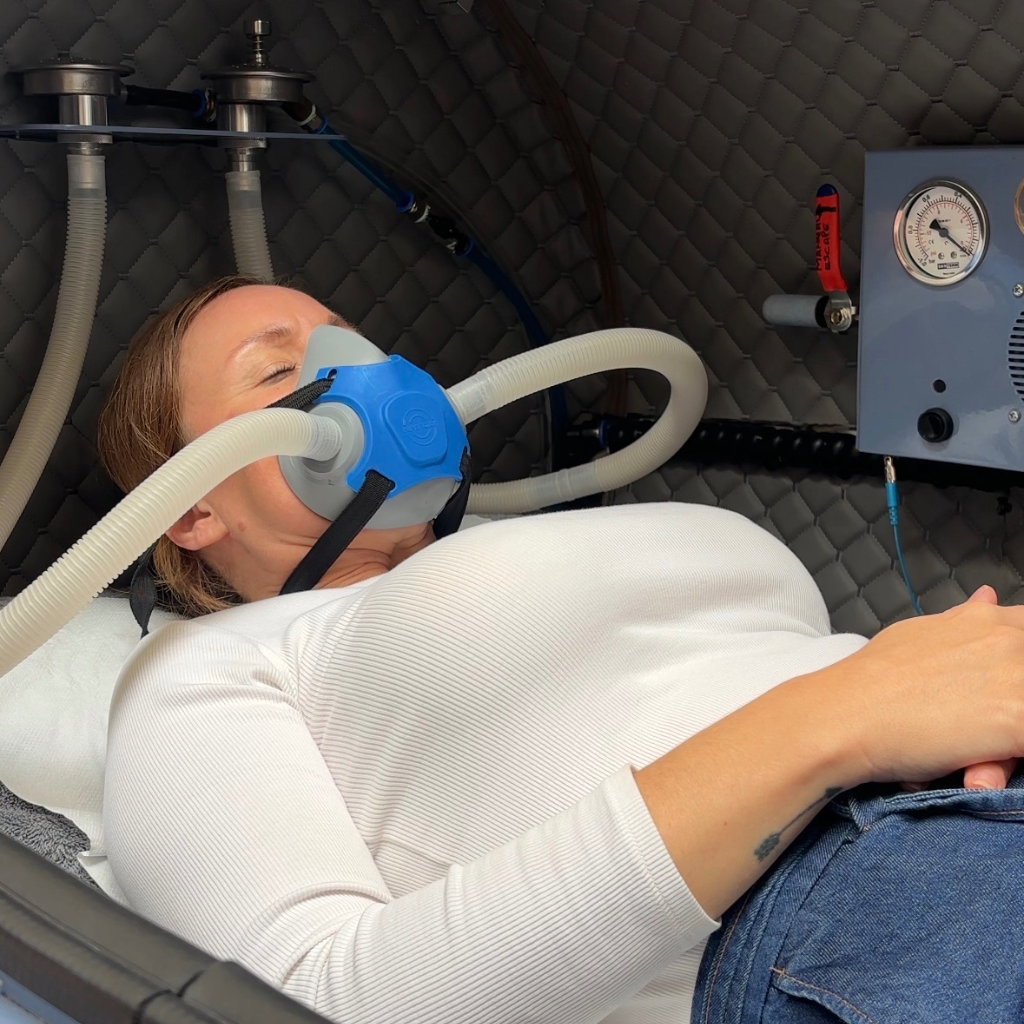
Hyperbaric oxygen therapy combines increased atmospheric pressure with a high concentration of oxygen.
At HybO2 House, our chambers operate at 2.0 ATA, twice normal atmospheric pressure, with clients breathing near-pure oxygen through a BIBS mask once at pressure.
That combination enables significantly greater oxygen availability than breathing oxygen under normal atmospheric conditions.
And when it comes to sudden hearing loss, the inner ear is exactly where researchers are particularly interested in that effect.
Studies suggest that HBOT can increase oxygen pressure within the inner ear, while also influencing microcirculation and inflammatory processes.
Importantly, when HBOT appears within specialist sudden-hearing-loss-guidance, it is not positioned as an alternative to medical assessment.
It is considered alongside medical treatment.
Guidance from the American Academy of Otolaryngology – Head and Neck Surgery states that clinicians may offer HBOT combined with steroid therapy within two weeks of the onset of SSNHL.
It can also be considered alongside steroids as a salvage option within one month of onset.
Again, the recurring message is clear:
Timing matters.
And the latest research is particularly interesting
This is where the conversation around HBOT and sudden hearing loss becomes even more interesting.
A systemic review and meta-analysis published in 2026 brought together 20 studies involving 1687 people with sudden sensorineural hearing loss.
Of those participants, 1087 received HBOT alongside medical treatment and 600 received medical treatment alone.
Researchers were able to combine data from 10 of the studies for their main analysis.
Their finding?
People receiving HBOT alongside medical treatment had 2.61 times higher odds of hearing recovery than people receiving medical treatment alone.
2.61 times higher odds.
That doesn’t tell us that every person receiving HBOT will recover their hearing.
But with more than 1600 people represented in the overall review, it is a finding worth paying attention to.
The researchers concluded that combining HBOT with medical treatment was associated with improved hearing recovery compared with medical treatment alone.
Another recent systematic review reached a similar conclusion, finding evidence that HBOT improved hearing when used within 30 days of the onset of sudden idiopathic sensorineural hearing loss, particularly when combined with steroid treatment.
This isn’t simply an interesting theory about oxygen.
There is now a meaningful body of clinical research behind the conversation.
Why might oxygen make a difference?
You don’t need to understand the anatomy of the ear to understand the basic principle.
The cochlea needs oxygen.
If oxygen supply to this delicate part of the inner ear becomes compromised, the cells involved in hearing may struggle to function normally.
By combining oxygen with increased atmospheric pressure, HBOT can significantly raise oxygen levels available to tissues.
Research into SSNHL suggests that HBOT may help increase oxygen availability within the inner ear, support its microcirculation and influence inflammatory processes.
It’s a relatively simple idea behind a very sophisticated physiological response:
Getting more oxygen to an area where oxygen may matter enormously.
“But what if it’s just earwax?”
It might be.
Sudden changes in hearing can have many causes, and something as straightforward as impacted earwax or an infection can certainly affect how well you hear.
The problem is that you cannot reliably diagnose the cause yourself simply by how it feels.
NICE specifically distinguishes hearing loss caused by obvious outer or middle-ear problems from unexplained sudden hearing loss and recommends urgent specialist assessment when the cause isn’t clear.
So, if you suddenly experience significant hearing loss in one or both ears, don’t lose valuable time trying to decide whether it feels serious enough.
Get it checked.
We’ve seen this at HybO2 House
Sudden hearing loss isn’t something we chose for this week’s content because it made an interesting social media topic.
We’ve had clients come through our doors because this has actually happened to them.
And this is one of those areas where understanding HBOT exists can be incredibly valuable.
HybO2 House is not an ENT service, and we don’t diagnose sudden hearing loss. Someone experiencing sudden unexplained hearing loss should always seek urgent medical assessment first.
But once HBOT becomes part of that conversation, we can explain how our chambers operate, what a session involves and what an appropriate HBOT schedule may look like.
Because with sudden sensorineural hearing loss, this isn’t necessarily something to research for a few weeks and come back to later.
The window in which HBOT is considered matters.
The one thing we’d like you to remember
If you take nothing else away from this article, make it this:
If you suddenly lose your hearing, don’t wait to see whether it comes back.
Seek urgent medical or ENT assessment.
And if you, someone you know, or a medical professional is exploring hyperbaric oxygen therapy following a diagnosis of sudden sensorineural hearing loss, speak to us as early as possible.
Sometimes knowing an option exists is the first step towards being able to explore it.
Curious about HybO2 House?
For anyone completely new to HBOT, our Signature Experience is £85 and includes a full consultation, 10 minutes of full-body red light therapy and 45 minutes of HBOT, followed by the opportunity to discuss the most appropriate next steps.
It’s an opportunity to experience both therapies, discover more about the technology and understand how they could fit into your wider approach to recovery.
If you’d like to book an appointment, or simply have some questions you’d like to ask us, reach out to us at HybO2 House, 01962 862 111 for more information.