There is something slightly deceptive about coming home from a holiday.
You’ve had time away; you’ve stepped out of your usual routine. Perhaps you’ve slept more, spent more time outside, eaten differently, moved more or simply had fewer demands on your time.
And yet, a few days after getting home, you can find yourself feeling tired, sluggish or simply not quite yourself.
Then normal life begins again.
The alarm goes off. Emails start coming in. The school run returns. The calendar fills up and before you know it, you’re expecting your body to operate at full speed again.
But recovery doesn’t necessarily work like that.
Rest and recovery aren’t quite the same thing.
Rest is important. Sleep is essential. But recovery is a broader process.
Your body is constantly responding to the demands placed on it. Physical activity, stress, travel, disrupted sleep, changes in routine and even the environment around you. Simply stopping for a few days doesn’t necessarily mean everything has returned to baseline.
Think about how you feel after a long journey. You’ve spent hours sitting down, perhaps crossed time zones, eaten at unusual times and slept differently. You may have technically been resting, but you don’t necessarily feel refreshed when you arrive home.
The same can be true of a holiday.
A break can be incredibly restorative, but can also come with late nights, more activity than usual, different food and drink, heat and a change in your normal sleep pattern.
Sometimes, your body simply needs a little more time to catch up.
The return to routine can be the real test.
One of the easiest things to do after time away is to go straight back to everything.
Back to work.
Back to training.
Back to early mornings.
Back to busy evenings.
Your diary might return to normal overnight. Your body doesn’t necessarily follow the same timetable.
This is where being intentional about recovery can make a difference.
Rather than waiting until you’re completely depleted, recovery can become part of the way you look after yourself every day.
That doesn’t have to mean adding another complicated routine to an already busy life. In fact, the foundations are often remarkably simple.
Sleep well. Stay hydrated. Eat well. Keep moving. Make time to switch off. And pay attention to how you actually feel.
Recovery is personal.
There isn’t one perfect recovery routine.
Someone training several times a week may have very different requirements from someone whose main source of physical and mental demand comes from a busy working life. Someone who has just returned from travelling may need something different again.
The important thing is understanding what your body is asking for.
Are you sleeping well?
Do you feel energised when you wake up?
How do you feel after exercise?
Are you carrying tension or aches?
Do you feel like you’re keeping up with your life, or simply getting through it?
These aren’t questions with a universal answer. They’re part of becoming more aware of your own baseline.
And once you understand what feeling good looks like for you, you can make more considered choices about how you support it.
Where therapies can fit into recovery.
At HybO2 House, we believe therapies should complement the foundations of a good wellbeing, not replace them.
Our approach is centred around giving you time, space and access to therapies that can form part of a considered approach to recovery, wellbeing and performance.
Hyperbaric oxygen therapy
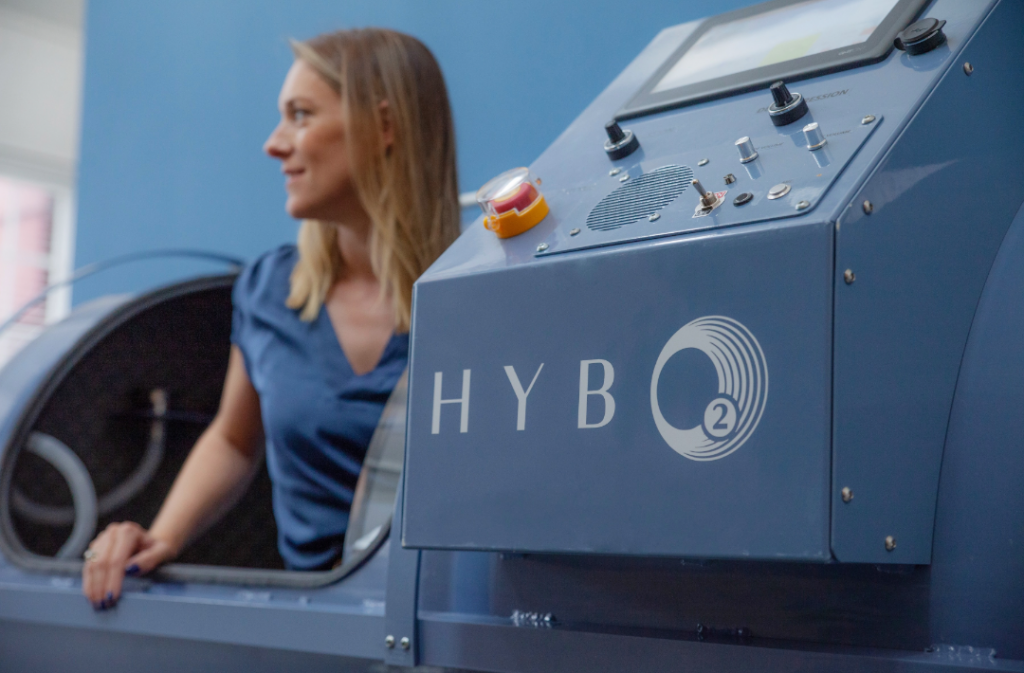
During hyperbaric oxygen therapy (HBOT), you spend time inside a pressurised chamber while breathing near-pure oxygen through our Built In Breathing System (BIBS).
At HybO2 House, our chambers operate at 2.0 ATA, and our sessions incorporate carefully designed air breaks.
HBOT is used by a wide range of people with different goals, from those looking to support their recovery and wellbeing, to athletes interested in incorporating oxygen therapy into their performance routines.
Red light therapy
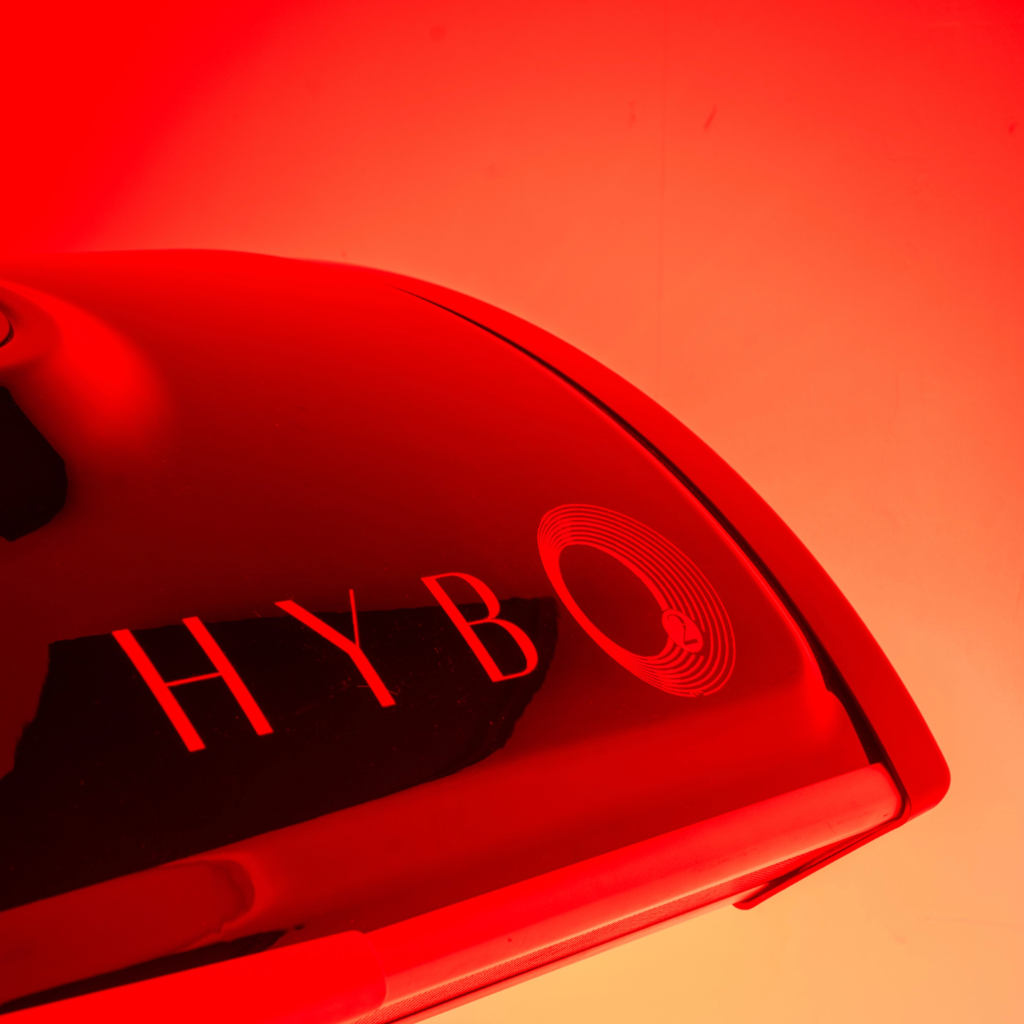
Our full-body red light therapy bed offers a very different approach to standard red light panels on the market.
Rather than treating one small area at a time, the bed provides full-body exposure using programmable red, near-infrared and infrared wavelengths.
We can personalise wavelengths, frequencies and duty cycle according to the individual’s goals, creating a session that is bespoke, rather than simply following a one-size-fits-all setting.
IV therapy
IV therapy at The Drip Bar, inside HybO2 House, provides another way to support your wellbeing, with fluids and nutrients delivered directly into the bloodstream.
Different formulations can be selected according to individual goals, which is why the experience starts with a conversation with our registered nurse and IV specialist, Bernie, rather than simply choosing an IV from a menu.
Whether you’re looking to support hydration, recovery or simply give yourself some dedicated time to reset, IV therapy can form part of a wider approach to looking after yourself.
Don’t wait until you’re running on empty.
Perhaps the biggest shift is simply changing how you think about recovery.
For many of us, recovery is something we turn to when we’re already exhausted. When our muscles are aching. When sleep hasn’t been great for weeks. When we finally have a spare afternoon.
But recovery doesn’t have to be a response to reaching your limit.
It can be something you deliberately make space for before you get there.
That might mean going to bed earlier. Taking a walk instead of another hour at your desk. Drinking more water. Making better choices around nutrition. Booking time that is genuinely yours.
Or it might mean exploring HBOT, red light therapy or IV therapy and considering how one of these could fit into your wider routine.
The important thing isn’t simply adding more to your schedule.
It’s being more intentional about how you look after yourself.
Your next step.
At HybO2 House, we don’t believe in telling everyone they need the same thing.
Your goals, your routine and your experience are your own.
That’s why every new client starts with a conversation.
Our Signature Experience is designed as an introduction to HybO2 House and includes a full consultation, 10 minutes of red light therapy and 45 minutes of HBOT, followed by a recommended pathway if you’d like to continue all for just £85.
And if you’re interested in IV therapy, Bernie offers free consultations within The Drip Bar to talk through the options available and help you understand what would help you achieve your wellness goals.
Because perhaps the best approach to recovery isn’t doing more.
It’s becoming more intentional about what you choose to do for yourself.
Your next step starts here.
If you’d like to book your Signature Experience, or simply have some questions you’d like to ask us, reach out to us at HybO2 House, 01962 862 111 for more information.