There’s a lot happening inside your body that you never have to think about.
Your heart keeps beating. Your brain processes an endless stream of information. Your muscles carry you through the day. You exercise, recover, concentrate, sleep, wake up and do it all again.
And behind virtually all of it is energy.
Not the “I need another coffee” kind of energy, but the energy your cells need simply to do their jobs.
That’s where your mitochondria come in.
They’re microscopic, they live inside almost every cell in your body and, until relatively recently, they probably weren’t something most of us gave much thought to.
But the more we understand about health, exercise, recovery and ageing, the more interesting mitochondria become.
And this week, for Mitochondrial Disease Awareness Week, they deserve a little attention.
So, what actually are mitochondria?
You may remember us previously calling mitochondria the “powerhouses of the cell.” It’s one of those phrases that sticks around because actually, it really does describe their job pretty well.
Mitochondria help turn the nutrients we eat and the oxygen we breathe into energy our cells can use.
Different cells have different energy demands, which is why mitochondrial problems don’t affect every part of the body in the same way. Tissues that use a lot of energy, particularly the brain, muscles, heart and nervous system, can be especially sensitive when mitochondrial function is disrupted.
What happens in mitochondrial disease?
Mitochondrial disease isn’t one single condition.
It’s the name given to a group of rare genetic disorders that affect the mitochondria and their ability to produce the energy cells need.
Because mitochondria are found throughout the body, mitochondrial disease can look very different from one person to another.
Some people experience profound fatigue or muscle weakness. Others may have difficulty exercising or recovering from physical activity. Mitochondrial disease can also affect areas including the brain, nervous system, heart, hearing and vision.
It can begin in childhood or adulthood, and even people with the same mitochondrial disorder can experience it differently.
That complexity is one of the reasons awareness matters.
For those living with mitochondrial disease, these aren’t simply symptoms of being tired or run down. They are part of a group of serious genetic conditions that can affect multiple systems within the body.
But mitochondria matter to all of us.
You don’t need to have mitochondrial disease for your mitochondria to be important.
They’re working for you right now.
They’re involved when you exercise, when you recover afterwards, when you concentrate and when your body responds to the demands you place on it.
Mitochondrial function has become an increasingly interesting area of research in everything from exercise and recovery, to healthy ageing.
It’s also one of the reasons we find red light therapy so fascinating at HybO2 House. Because red light isn’t only about what happens at the surface of the skin. Its relationship with our cells goes much deeper.
Where does red light therapy come into it?
Red light therapy, also known as photobiomodulation, uses specific wavelengths of red and near-infrared light.
When that light reaches our tissues, it can interact with processes happening within our cells, including processes involving the mitochondria.
In simple terms, researchers are interested in how particular wavelengths of light can influence the cellular machinery involved in producing and managing energy.
And because mitochondria play such a central role in that process, they naturally sit at the heart of much of the conversation around photobiomodulation.
It’s an exciting area of research, with growing interest in how red and near-infrared light can influence the way our cells produce and use energy.
What does that mean for the rest of us?
Fatigue, muscle weakness and difficulty recovering can be symptoms of mitochondrial disease, but they are also things many people experience for completely different reasons.
A hard week at work. Not enough sleep. A demanding training programme. Stress. A tough workout. Simply doing too much and recovering too little.
Experiencing those things certainly doesn’t mean you have mitochondrial disease.
But it does highlight just how much we rely on the processes responsible for producing energy throughout the body.
Red light therapy has been researched in areas including muscle function, exercise performance, soreness and recovery, which is one of the reasons it has become increasingly popular with people looking to support their training, recovery and wider wellbeing.
The science continues to develop, and different wavelengths, doses and protocols can produce different effects. Something we think is particularly important when choosing how red light therapy is delivered.
Red light therapy at HybO2 House.
At HybO2 House, our approach goes beyond simply switching on a bank of red LED’s.
Our full-body, 360-contact, red light therapy bed allows us to work with a range of red, near-infrared and infrared wavelengths, alongside adjustable frequencies and duty cycles.
That means we can personalise sessions according to what each client is looking to support.
Some people use red light therapy alongside their training and recovery routine. Others make it part of their wider approach to wellbeing. And some simply enjoy having a short period in their week dedicated entirely to slowing down and doing something for themselves.
The more we understand about what happens at a cellular level, the more fascinating the bigger picture becomes.
Small structures. A very big job.
Mitochondria might be microscopic, but their role within the body is anything but small.
For people living with mitochondrial disease, Mitochondrial Disease Awareness Week is an opportunity to bring greater understanding to a group of complex conditions that many people may never have heard of.
For the rest of us, perhaps it’s also an opportunity to appreciate just how much is happening beneath the surface every second of every day.
Our bodies are constantly producing energy, adapting and responding to the world around us. Often without us giving any of it a second thought.
Sometimes, understanding a little more about how that happens changes the way we think about looking after ourselves.
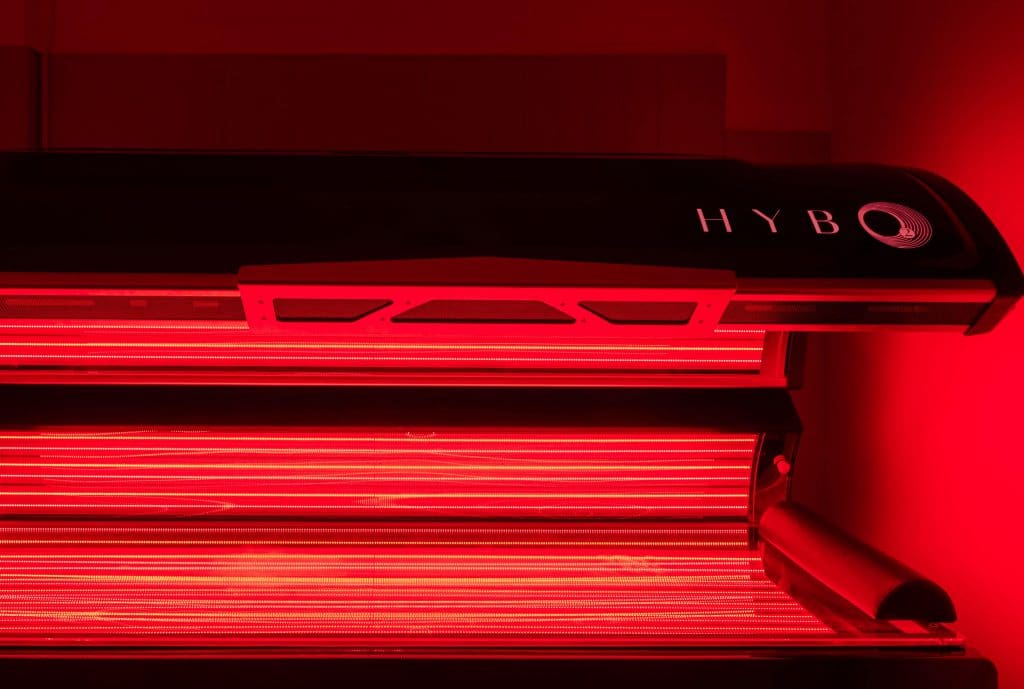
Experience red light therapy at HybO2 House
If you’re curious about red light therapy and how it could complement your recovery, performance or wider wellbeing routine, our team can help you explore whether it’s right for you and how we can create the perfect protocol for your goals.
If you’d like to book your red light therapy, or simply have some questions you’d like to ask us, reach out to us at HybO2 House, 01962 862 111 for more information.