We can spend months preparing for surgery.
Researching surgeons. Reading reviews. Choosing dates. Booking time away from work. Buying compression garments.
And yet one of the biggest parts of the process happens after you leave the operating theatre.
Recovery.
Whether it’s a facelift, tummy tuck, breast surgery or any procedure, surgery asks a lot of the body. Tissue has been cut, moved or repaired. Swelling and inflammation follow. New collagen needs to form. Blood vessels need to develop. Wounds need to close.
All of that requires energy, resources and importantly, oxygen.
Healing is an active process.
A surgical wound may look fairly quiet from the outside, but underneath the skin there is a huge amount going on.
Cells involved in repair need oxygen. Fibroblasts use it during collagen production. New blood vessels begin forming to support recovering tissue. The body is also dealing with swelling, inflammation and the increased demands placed on the area following surgery.
This is one of the reasons surgery and HBOT (hyperbaric oxygen therapy) are increasingly being discussed together.
HBOT uses increased atmospheric pressure alongside oxygen. At HybO2 House, our hard-shell chambers operate at 2.0 ATA, twice normal atmospheric pressure, while near-pure oxygen is delivered through our BIBS breathing system.
The combination of oxygen and pressure increases the amount of oxygen available throughout the body and to tissues, creating conditions researchers are studying in relation to wound repair, collagen formation, new blood-vessel development and tissue recovery.
And the evidence in aesthetic surgery is beginning to build.
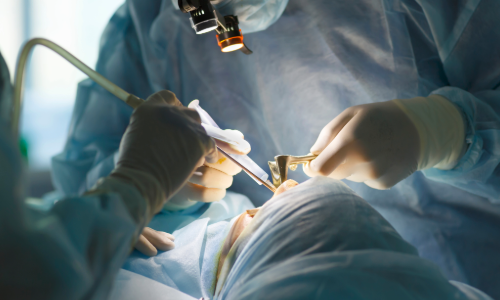
What happened in 356 tummy tuck patients?
One of the most interesting studies looked at 356 people undergoing abdominoplasty, commonly known as a tummy tuck.
Of those, 83 received HBOT before surgery.
Postoperative complications were reported in 32.6% of those who did not receive HBOT compared with 8.4% of the HBOT group.
That works out at roughly a 74% lower complication rate in the group who had preoperative HBOT.
Researchers also reported tissue necrosis in 6.2% of the comparison group, while none was reported in the HBOT group. Because this was a retrospective study rather than a randomised trial, it shows an association rather than proving HBOT alone caused the difference, but the size of that difference is certainly worth paying attention to.
And this is particularly interesting to us because HBOT wasn’t only used after surgery.
It was used beforehand.
Why some of our clients start before surgery.
When people hear “surgery recovery” they naturally think about what happens once the procedure is over.
But many of our own clients choose to visit HybO2 House for a few sessions in the run-up to their operation, before returning afterwards as part of their wider recovery plan.
The idea is not that HBOT somehow makes the body immune to the effects of surgery. It doesn’t.
It’s about thinking about recovery before recovery is needed.
We now also welcome patients who have been recommended us by cosmetic surgeons across the UK, alongside people who discover HBOT independently while researching their procedure.
It’s a very different mindset from waiting until you are sore, swollen and recovering at home before asking:
What else could I have done?
Surgery recovery and HBOT: what does the research show?
There’s interesting research here too.
A study involving 20 women undergoing facelift surgery compared nine patients who received HBOT with 11 who did not.
The average wound-healing time in the group without HBOT was 36.9 days.
In the HBOT group?
13.3 days.
That’s a different of more than 23 days on average.
The HBOT patients received an average of just over seven sessions, although this was a small case-control study and larger randomised trials are needed to establish exactly how broadly those results apply.
Now researchers are looking at the bigger picture.
It isn’t just individual studies anymore.
A 2025 systemic review and meta-analysis brought together 11 studies involving 734 aesthetic-surgery patients, including people undergoing procedures such as abdominoplasty and breast surgery.
Across the research, HBOT was associated with favourable postoperative recovery outcomes, including healing time and patient satisfaction.
And the research has continued.
A new review published just this month, October 2026, looked specifically at HBOT in facial plastic and aesthetic surgery. Researchers examined its use across procedures including facelifts and rhinoplasty and concluded that HBOT may have a useful adjunctive role in tissue oxygenation, wound healing and recovery.
So, while HBOT around routine cosmetic surgery is still an evolving area of research, it is no longer an obscure conversation.
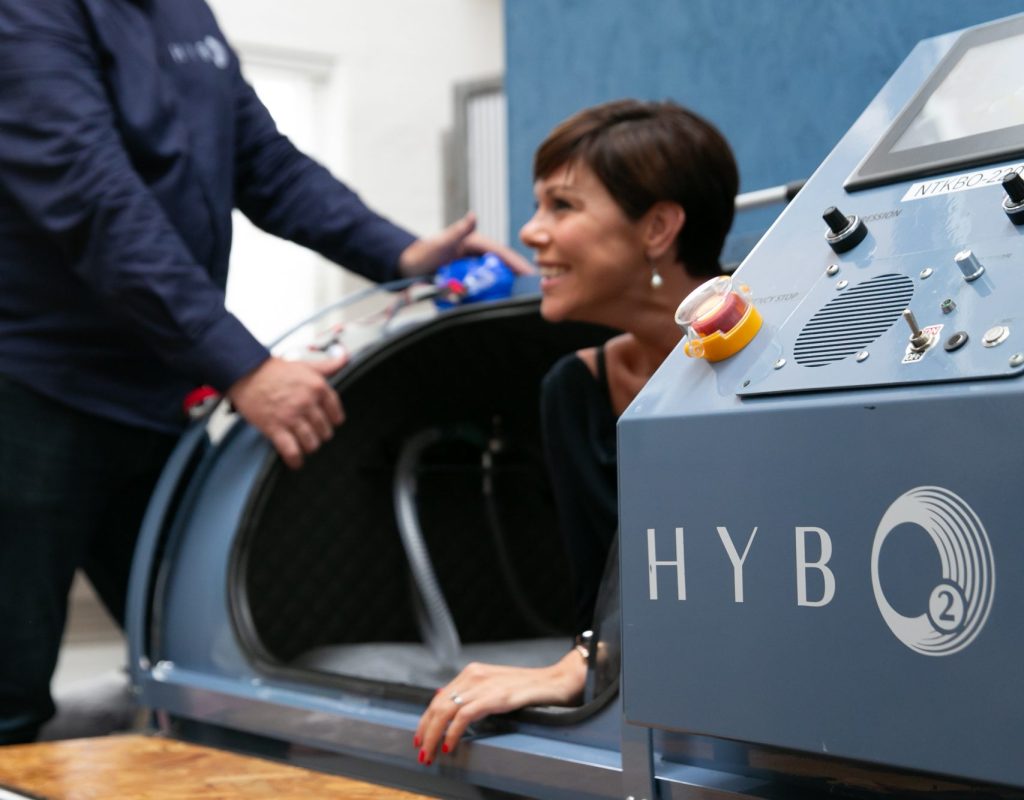
HBOT already has an established place in surgical medicine.
There is also an important distinction between using HBOT to support routine recovery and using it when surgical tissue becomes compromised.
HBOT is already recognised within specialist hyperbaric medicine for compromised grafts and flaps, situations where tissue is threatened because blood flow or oxygen supply has become inadequate.
The Undersea and Hyperbaric Medical Society specifically recognises HBOT in this setting, although it does not recommend it simply to support normal, healthy grafts or flaps.
That established role tells us something important: oxygen availability can matter enormously when tissue is trying to survive and repair.
Don’t just plan surgery. Plan the recovery.
Good surgical recovery will never come down to one thing.
Your surgeon’s advice comes first. Rest matters. Nutrition matters. Hydration matters. Wound care matters. Following postoperative instructions matter.
HBOT sits alongside that wider picture.
At HybO2 House, we regularly speak to people planning cosmetic and medical procedures who want to understand whether HBOT could form part of their preparation and recovery.
And ideally, that conversation happens before your surgery date, not once you’re already recovering.
If you have a procedure coming up, speak to our team. We can talk you through how HBOT works, when clients commonly choose to visit around surgery and what a session at HybO2 House involves.
Because surgery might happen in a day. But healing doesn’t.
Curious about HybO2 House?
At HybO2 House, our Signature Experience is £85 and gives you the opportunity to experience both therapies.
It includes:
A full consultation
10 minutes of 360° full-body Red Light Therapy
45 minutes of Hyperbaric Oxygen Therapy
And dedicated time to talk with a member of our team to ask questions, understand how HBOT can benefit you and map out a post operative plan to help with your recovery.
If you’d like to book an appointment, or simply have some questions you’d like to ask us, reach out to us at HybO2 House, 01962 862 111 for more information.