It sounds like something we invented for Halloween.
Zombie cells.
But they’re very real. And they’ve become one of the most talked-about areas of ageing and longevity research.
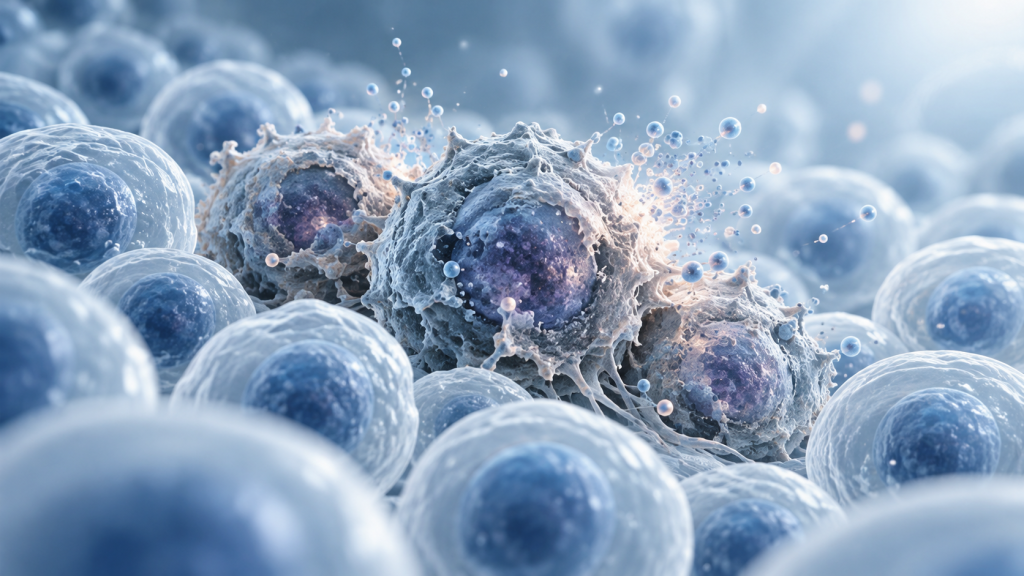
Their proper name is senescent cells: cells that have stopped dividing but, rather than being immediately removed from the body, remain alive and active.
And as scientists learn more about what happens when these cells accumulate, an interesting question has emerged:
Could changing the number of senescent cells influence the way we age?
That’s where the research gets interesting, including some fascinating work involving hyperbaric oxygen therapy (HBOT).
So what exactly is a “zombie cell”?
Cells don’t live forever.
Throughout life, cells divide, become damaged, repair themselves and eventually die or are cleared away.
Sometimes, however, a cell enters a state known as senescence. It stops dividing but remains metabolically active.
That isn’t necessarily a bad thing.
Cellular senescence can have useful roles, including helping prevent damaged cells from continuing to multiply. The immune system can also identify and clear senescent cells as part of normal tissue maintenance and repair.
The problem seems to arise when too many remain behind.
As we age, the body’s ability to clear senescent cells can become less effective, allowing them to accumulate in tissues.
And they don’t simply sit there doing nothing.
Why scientists are targeting them
Senescent cells can release a mixture of inflammatory molecules and other biological signals into the tissue around them.
This is known as the senescence-associated secretory phenotype, or SASP.
Think of it as a cell that has stopped doing its normal job but is still communicating loudly with its neighbours.
When senescent cells accumulate, those signals are being investigated for their role in chronic inflammation, tissue function and a wide range of age-related changes. This is why researchers are now exploring ways to remove, reduce or modify senescent cells — a field that has become an important part of modern longevity science.
Which brings us to HBOT.
What does HBOT have to do with zombie cells?
Hyperbaric oxygen therapy combines increased atmospheric pressure with oxygen.
At HybO2 House, our hard-shell chambers operate at 2.0 ATA, twice normal atmospheric pressure, while near-pure oxygen is delivered through our BIBS breathing system.
HBOT does more than simply deliver oxygen.
Repeated exposure to oxygen under pressure creates a physiological stimulus that can influence cellular signalling, antioxidant responses, blood-vessel formation and other adaptive processes within the body.
Researchers have therefore begun investigating HBOT not only in healing and recovery, but in healthy ageing and cellular biology too.
And one study in particular attracted a lot of attention.
What happened to the "zombie cells"?
A prospective clinical trial enrolled 35 healthy adults aged 64 and over and investigated what happened to markers of cellular ageing during a course of HBOT.
Participants followed an intensive research protocol consisting of 60 HBOT sessions at 2.0 ATA over three months, with scheduled air breaks during each session. Thirty participants completed the full intervention; because some blood samples could not be analysed, the senescent-cell analysis ultimately included 20 people.
The results were striking.
After the HBOT protocol:
Senescent T-helper cells decreased by approximately 37%.
And:
Senescent T-cytotoxic cells decreased by approximately 11%.
In other words, two populations of immune cells showing features of cellular senescence were measurably reduced.
That’s the research behind the “zombie cell” statistics you may have seen us sharing this week.
And then there were the telomeres...
The researchers also investigated another well-known marker associated with cellular ageing: telomeres.
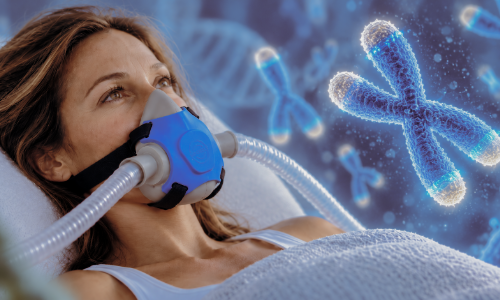
Telomeres are protective structures at the ends of our chromosomes. You can think of them a little like the plastic tips on shoelaces, helping protect the genetic material inside the cell.
They tend to shorten with repeated cell division and ageing.
In the same HBOT study, telomere length increased by more than 20% in several immune-cell populations, with particularly large changes reported in B cells.
So within the same study, researchers saw changes in two major areas associated with biological ageing: cellular senescence and telomere length.
Understandably, that generated a lot of interest.
Does that mean HBOT reverses ageing?
No. And that distinction matters.
This was a relatively small study without a control group, and it used a very specific, intensive 60-session protocol.
We therefore cannot take those results and say that HBOT “reverses ageing”, nor can we assume the same cellular changes will occur after a smaller number of sessions.
The researchers themselves noted that the ideal relationship between pressure, session duration, number of exposures and the resulting biological effects still needs further investigation.
But it does show something fascinating:
HBOT is capable of producing measurable changes in biological markers that scientists associate with ageing.
And the wider conversation continues to develop.
A systematic review published in October 2026 looked at HBOT and physical and cognitive performance in adults aged 50 and over. Across seven studies involving 502 participants, researchers reported encouraging findings particularly around cognition, including attention, executive function and processing speed, although they also stressed that the overall evidence base is still relatively small.
So this isn’t simply about looking younger.
The emerging field of healthy-ageing research is increasingly interested in what is happening inside our cells, blood vessels, mitochondria and brain as we get older.
The science of ageing is changing.
For a long time, ageing was treated as something fairly simple: we get older, the body slows down, and that’s that.
The science now looks very different.
Researchers are studying cellular senescence, telomeres, mitochondrial function, inflammation, oxygen regulation and the body’s ability to adapt to physiological stress.
A 2026 scientific review even proposed the concept of “oxygenaging” — looking at how changes in the way oxygen is delivered, used and regulated throughout the body may contribute to ageing and cellular resilience. HBOT was among the oxygen-based interventions discussed within that emerging framework.
And that is what makes this area so interesting to us at HybO2 House.
HBOT has long been associated with oxygen, healing and recovery.
Now scientists are asking much bigger questions about what oxygen under pressure may be doing at a cellular level.
Zombie cells might make a brilliant Halloween headline.
But the science behind them is very real.
Curious about HybO2 House?
At HybO2 House in Winchester, our hard-shell hyperbaric chambers operate at 2.0 ATA, with near-pure oxygen delivered through our BIBS system.
If you’re curious about HBOT and want to understand what it feels like, how it works and whether it could form part of your wider wellness routine, our Signature Experience is the ideal place to start.
It includes a full consultation, 10 minutes of 360° full-body red light therapy and 45 minutes of HBOT for £85.
If you’d like to book an appointment, or simply have some questions you’d like to ask us, reach out to us at HybO2 House, 01962 862 111 for more information.
Because the future of healthy ageing might be less about fighting the years and more about understanding what is happening inside our cells.